Index Engines Research Reveals Ransomware Evolving to Avoid Detection and Complicate Recovery
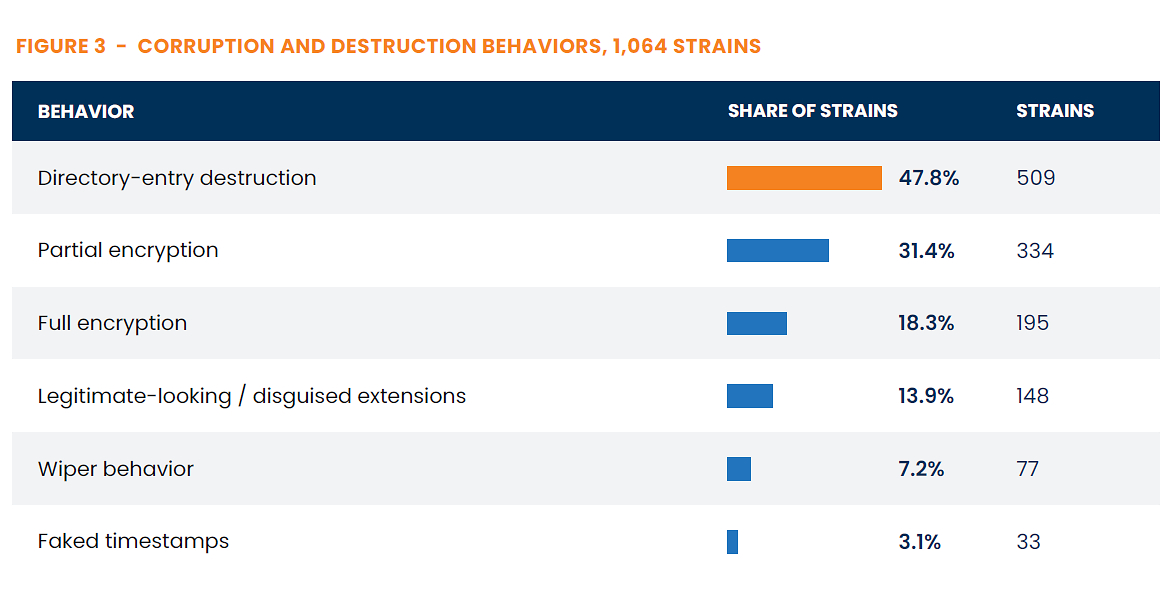
A new analysis from the CyberSense Research Lab at Index Engines has found that ransomware variants are increasingly using techniques designed to evade detection by traditional security tools. Among 1,064 strains analyzed in early 2026, directory-entry destruction was observed in nearly half (47.8%), far more than full encryption cases (18.3%). These newer threats preserve file extensions and timestamps while maintaining low entropy levels, making them harder to detect through conventional scanning methods. The research highlights a growing sophistication among ransomware operators who are adapting their tactics to avoid triggering alerts based on known corruption indicators such as rapid changes or high entropy spikes. The study also found that polymorphic techniques were used in 64.7% of samples, allowing malware to change its signature between infections and evade signature-based detection systems. Index Engines' CyberSense Lab uses AI/ML models trained on real-world ransomware behavior to detect these advanced threats with high accuracy (99.99%). The findings suggest that organizations must move beyond surface-level file checks when assessing data integrity during recovery, as seemingly unaffected files may still be compromised.
Topics: AI/ML models cyber resilience Index Engines ransomware